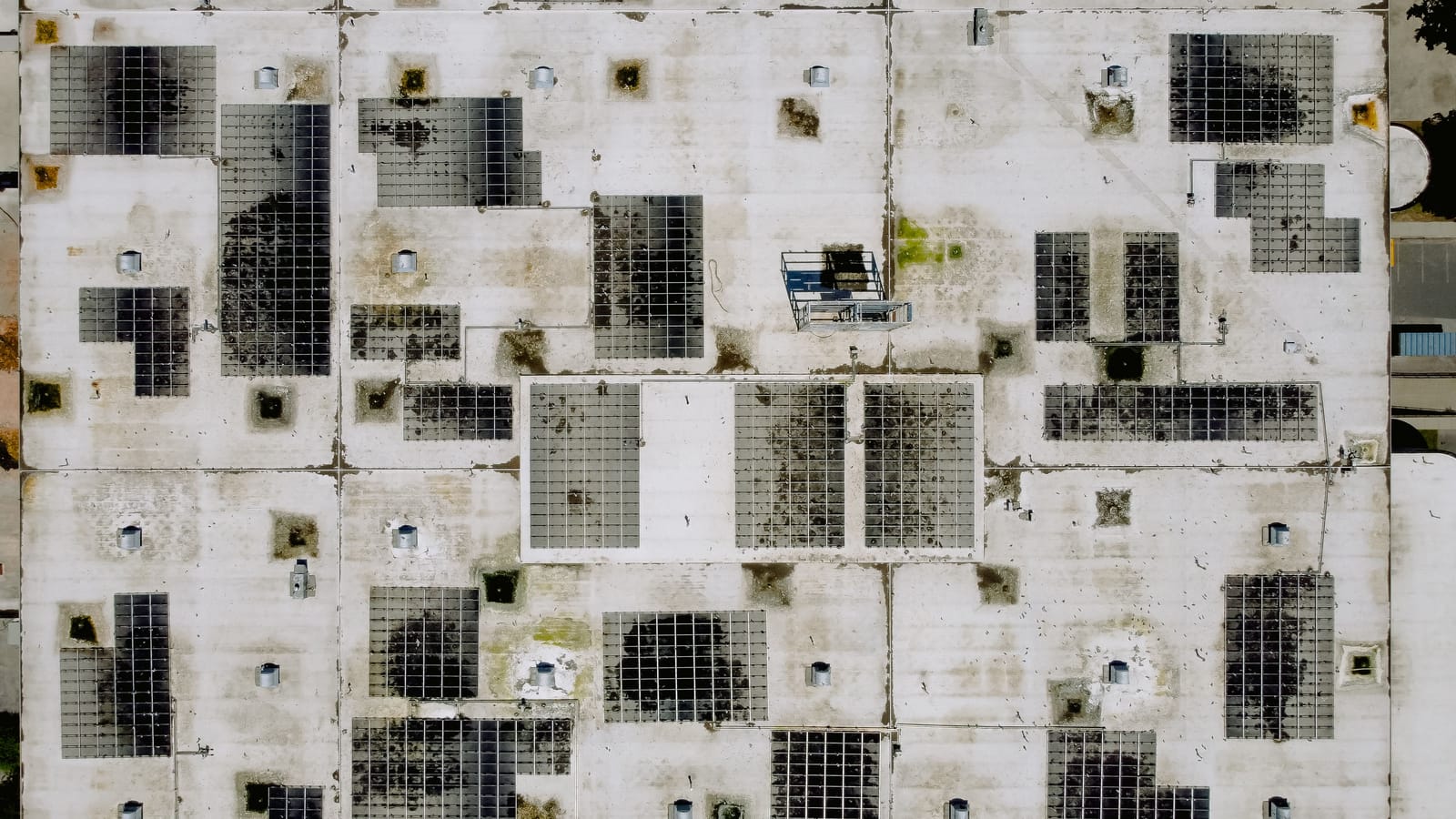
Flat-roof solar is all we do
We are a specialist installer of solar panels on flat roofs, working with commercial building owners, facilities and estates managers, and homeowners with flat-roofed extensions across the UK. We deliberately do not present ourselves as a general solar company that happens to take flat-roof jobs. A flat roof is a different engineering problem from a pitched one — it has no natural tilt, a waterproofing membrane that must not be compromised, and a deck whose load capacity decides what can go on it — and treating it like a pitched roof is exactly how arrays end up overloading structures or voiding roof warranties. Focusing on this one problem is how we get it right.
We lead with the roof, not the panel brand
The first questions we ask are about your deck and your membrane, not the module you have read about. Every project starts with a structural view of what the roof can carry — a ballasted array typically adds fifteen to twenty-five kilograms per square metre plus wind uplift — and a survey of the membrane type and its remaining service life. We design the mounting penetration-free by default, so the waterproofing guarantee stays intact, and we size the system from your actual half-hourly consumption rather than a rule-of-thumb yield figure. Where the deck is marginal we use a lighter system; where the roof is life-expired we say so and recommend renewing it before the array goes on. That roof-first discipline is the difference between a system that lasts twenty-five years and one that has to be lifted to fix a leak underneath it.
How we work
We are independent of any single manufacturer, so the specification follows the roof and the load, not a supplier target. Every proposal is itemised in writing and includes the wind-uplift and structural design to BS EN 1991-1-4, the DNO grid-connection position, and a self-consumption model built from your own data — no headline payback plucked from the air. A named surveyor carries out your site visit and stays with the project, rather than handing you between a call centre and a subcontractor. Domestic installations are MCS-certified so you can access the Smart Export Guarantee; commercial systems are engineered to the same standard, with the structural sign-off, the electrical certification to BS 7671, and the grid approval that a compliant installation needs.
Honest about the limits
We would rather lose a sale than sell a system that does not pay or a roof loading that should not happen. If your daytime demand is too low for solar to make sense, if the deck genuinely cannot carry an array, or if the membrane needs replacing first, we will tell you plainly — those cases are set out on our is it worth it and myths versus facts pages. We work to the wind-uplift, structural, asbestos, CDM and Work at Height duties that flat-roof solar carries, and we connect you with an accredited installer network rather than claiming memberships the operating entity does not itself hold. The result is a build you can defend to a board, an insurer or a landlord — and a roof that stays watertight while it generates.